
No products in the cart.
Only this weekend
Super Discount
Items on sale this week
Top picks this week. Up to 50% off the best selling products.


PreSonus also has updated two of its complete recording solutions with the AudioBox USB 96 25th Anniversary Edition interface. The updated AudioBox 96 Studio Bundle 25th Anniversary Edition mates the new interface with Studio One Artist, HD7 headphones, an M7 large-diaphragm condenser microphone, a desktop tripod mic stand, and cables. The AudioBox Studio Ultimate Bundle 25th Anniversary Edition adds a pair of Eris E3.5 studio monitors to the AudioBox 96 Studio Bundle 25th Anniversary Edition to provide a complete recording and listening setup. The new interface and recording bundles are available immediately for the following anticipated U.S. street prices: AudioBox USB 96 25th Anniversary Edition $99.95; AudioBox 96 Studio Bundle 25th Anniversary Edition $209.95; AudioBox Studio Ultimate Bundle 25th Anniversary Edition $309.95.
For more information about the AudioBox USB 96 25th Anniversary Edition audio interface, visit www.presonus.com/products/AudioBox-USB-96. For more about PreSonus’ complete recording solutions, visit www.presonus.com/products/Complete-Recording-Solutions.
Below are the minimum computer-system requirements for AudioBox USB 96.
For information on compatibility with Chrome OS, click here.
For information on compatibility with iOS/iPadOS, click here.
For information on compatibility with Android devices, click here.
| Capsule Type | Back-electret condenser |
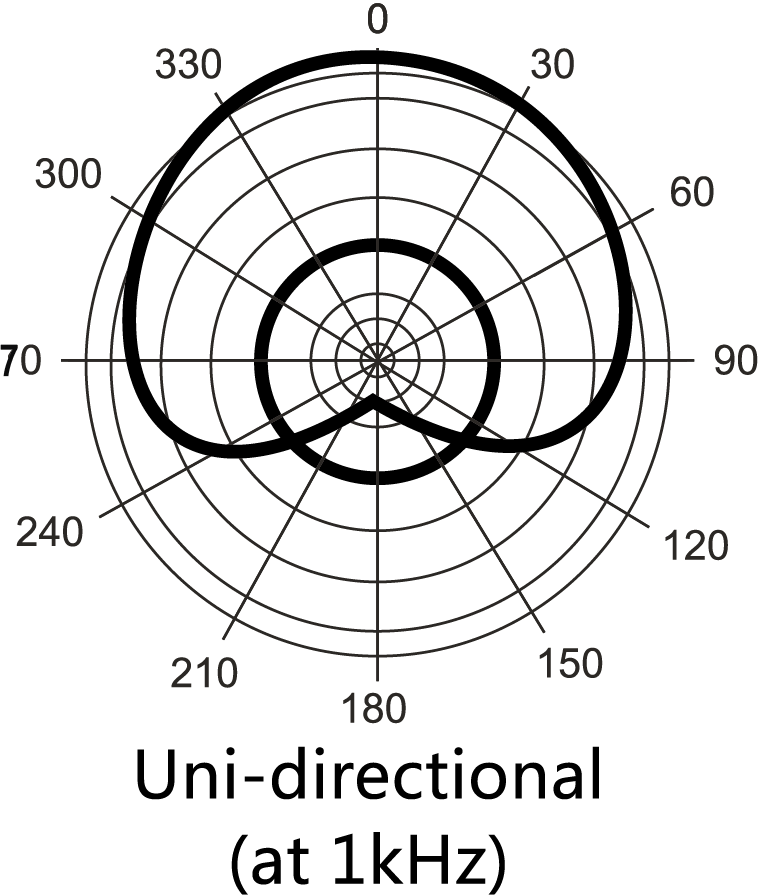
| Polar Patter | Unidirectional |
| Sensitivity | -38 dB ±3 dB (0 dB=1V/Pa at 1 kHz) |
| Frequency Response | 20 Hz to 18 kHz |
| Output Impedance | 150Ω ±30% (at 1 kHz) |
| Equivalent Noise Level | 19 dBA |
| Maximum SPL | 134 dB (at 1 kHz = 1% THD) |
| S/N Ratio | 75 dB |
| Working Voltage | 48V Phantom Power |

Inputs |
|
|---|---|
| 1- Stereo 1/8″ | |
| 2- Balanced ¼” TRS | |
| 2- Unbalanced RCA |
Performance |
|
|---|---|
| Frequency Response | 80 Hz – 20 kHz |
| Crossover Frequency | 2.8 kHz |
| Amplifier Power | 25W/speaker |
| LF Driver | 3.5″ |
| HF Driver | 1” silk dome |
| Peak SPL (@ 1 meter) | 100 dB |
| Input Impedance | 10 kΩ |
User Controls |
|
|---|---|
| Volume Range | A-type taper |
| MF Control | Variable (-6 to +6 dB, center 100 Hz) |
| HF Control | Variable (-6 to +6 dB, center 10 kHz) |
Protection |
|
|---|---|
| RF interference | |
| Output-current limiting | |
| Over-temperature | |
| Turn-on/off transient | |
| Subsonic filter | |
| External mains fuse |
Power |
|
|---|---|
| 100-120V ~50/60 Hz or 220-240V ~50/60 Hz |
Cabinet |
|
|---|---|
| Vinyl-laminated, medium-density fiberboard |
Physical |
|
|---|---|
| Width | 5.6″ (141 mm) |
| Depth | 6.4″ (162 mm) |
| Height | 8.3″ (210 mm) |
| Weight (per pair) | 6.4 lb. (2.9 kg) |
| Acoustic Design | Dynamic, semi-open |
| Driver | 50 mm, neodymium |
| Frequency Response | 10 Hz to 30 kHz |
| Sensitivity | 98 dB SPL (1 mW) |
| Maximum Power | 300 mW |
| Rated Impedance | 32Ω |
| Earpad | Leather |
| Weight, without Cable | 7.8 oz (222g) |
| Cable | 8′ 2″ (2.5m) straight, single-sided |
| Plug Adapter | 1/8″ to 1/4″ (3.5 to 6.3 mm), screw-on, gold-plated, stereo mini-plug |
Microphone Preamp |
|
| Type | XLR Female Balanced |
| Frequency Response (±3.0 dB) | 20 Hz to 20 kHz |
| Input Impedance (Balanced) | 1200Ω |
| THD+N (unwtd, 1 kHz @ +4 dBu Output, Unity Gain) | < 0.008% |
| S/N Ratio (Unity Gain, Ref. = +4 dBu, 20 Hz to 22 kHz) | > 95 dB |
| Common Mode Rejection Ratio (1 kHz, 55 dB Gain) | > 45 dB |
| Gain Control Range (± 2 dB) | +6 dB to +52 dB |
| Max Input Level (Unity Gain, 1 kHz @ 0.5% THD+N) | -3 dBu |
| Phantom Power (±2 VDC) | +48 VDC |
Instrument Input |
|
| Type | ¼” TS Female Unbalanced |
| Input Impedance | 0.5 MΩ |
| Gain Control Range (± 2 dB) | +2d B to +48 dB |
Line Outputs |
|
| Type | ¼” Balanced |
| Output Impedance | 51Ω |
Headphone Output |
|
| Type | ¼” TRS Active Stereo |
| Maximum Output | 60 mW/Ch @ 60Ω Load |
| Frequency Response (±1.0 dB) | 20 Hz – 30 kHz |
MIDI I/O |
|
| Type | Dual 5-pin Female DIN |
Digital Audio |
|
| ADC Dynamic Range (A-wtd, 48 kHz Sample Rate) | 105 dB |
| DAC Dynamic Range (A-wtd, 48 kHz Sample Rate) | 105 dB |
| Bit Depth | 24 |
| Reference Level for 0 dBFS | +4 dBu |
| Supported Sample Rates (kHz) | 44.1, 48, 88.2, 96 |
| Power | USB 2.0 bus-powered |
Physical |
|
| Dimensions | 1/3U (steel chassis) |
| Height | 5.5” (139.7 mm) |
| Depth | 1.75″ (44.45 mm) |
| Width | 5.5” (139.7 mm) |
| Weight | 1.3 lbs (0.59 kg) |
Only logged in customers who have purchased this product may leave a review.
| Settings | Presonus AudioBox 96 Studio Bundle 25th Anniversary Edition remove | Sennheiser EW 100 G4-ME2 Wireless Omni Lavalier Microphone System remove | Sennheiser DJ Headphone HD 25 remove | Presonus Quantum 4848 remove | Electro Voice PC Desktop 12 remove | Sennheiser HD 200 PRO Headphone remove |
|---|---|---|---|---|---|---|
| Image | 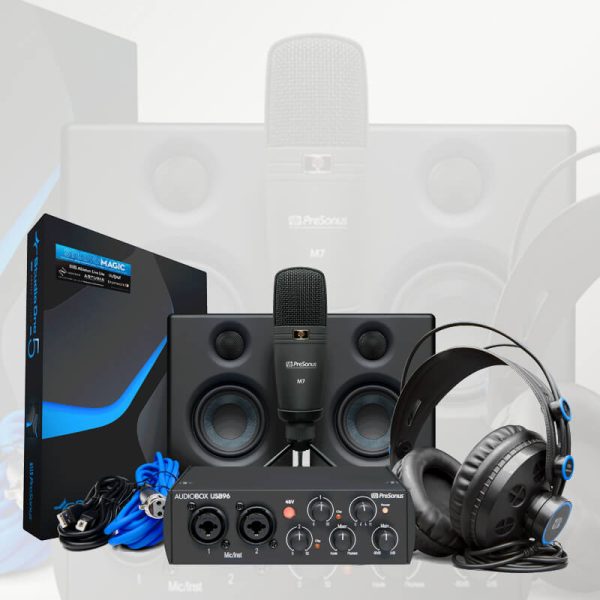 |  | 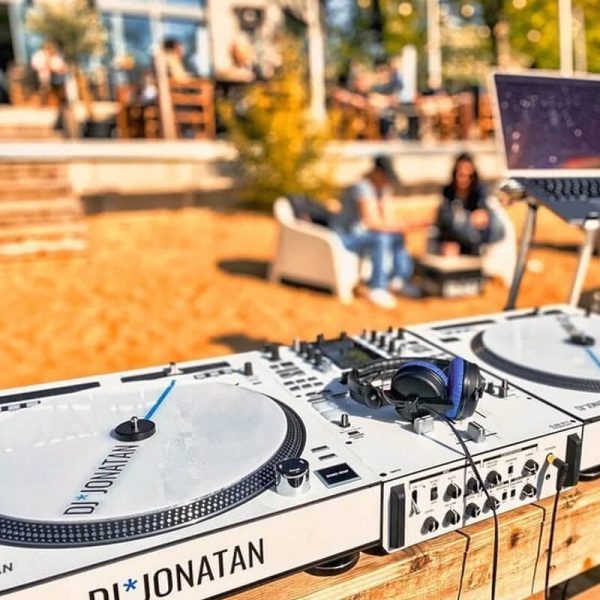 |  | 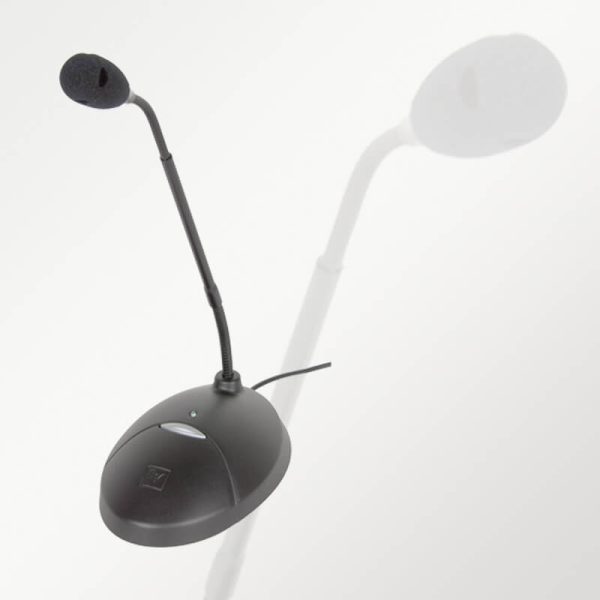 | 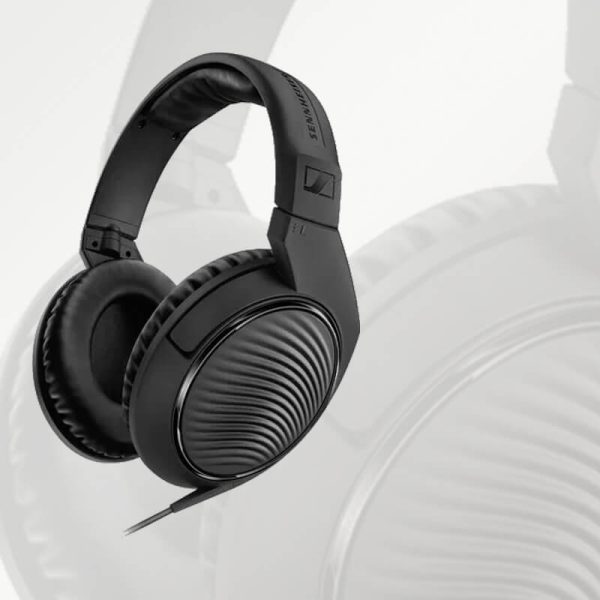 |
| SKU | ||||||
| Rating | ||||||
| Price | ||||||
| Stock | In Stock
| In Stock
| In Stock
| In Stock
| In Stock
| In Stock
|
| Availability | In Stock | In Stock | In Stock | In Stock | In Stock | In Stock |
| Add to cart | ||||||
| Description |
|
|
|
|
|
|
| Content | PreSonus also has updated two of its complete recording solutions with the AudioBox USB 96 25th Anniversary Edition interface. The updated AudioBox 96 Studio Bundle 25th Anniversary Edition mates the new interface with Studio One Artist, HD7 headphones, an M7 large-diaphragm condenser microphone, a desktop tripod mic stand, and cables. The AudioBox Studio Ultimate Bundle 25th Anniversary Edition adds a pair of Eris E3.5 studio monitors to the AudioBox 96 Studio Bundle 25th Anniversary Edition to provide a complete recording and listening setup. The new interface and recording bundles are available immediately for the following anticipated U.S. street prices: AudioBox USB 96 25th Anniversary Edition $99.95; AudioBox 96 Studio Bundle 25th Anniversary Edition $209.95; AudioBox Studio Ultimate Bundle 25th Anniversary Edition $309.95.
For more information about the AudioBox USB 96 25th Anniversary Edition audio interface, visit www.presonus.com/products/AudioBox-USB-96. For more about PreSonus’ complete recording solutions, visit www.presonus.com/products/Complete-Recording-Solutions.
General Features M7
Features Eris E3.5Components and construction
User controls
Power and safety
Inputs and outputs
Included Accessories
Features HD7
Features AudioBox USB 96
Input/Output
Digitalia
Included Software
Physical
Computer system requirements:Below are the minimum computer-system requirements for AudioBox USB 96.macOS®
Windows®
Chrome OSFor information on compatibility with Chrome OS, click here.iOS/iPadOSFor information on compatibility with iOS/iPadOS, click here.AndroidFor information on compatibility with Android devices, click here. |
The perfect choice for moderators and presenters: Robust bodypack transmitter and unobtrusive clip-on microphone, ME 2-II (omnidirectional) or ME 4 (cardioid) with high speech intelligibility for easy hands-free operation on any stage.
Reliability and performance
When taking any stage, large or small, a presenter needs to have just as much confidence in their equipment as they do in themselves. The ability to rely on technology is just as much a factor as the content itself when it comes to delivering a message to an audience. Enter the evolution wireless G4 100 Series—a wireless system built on the need for dependability that continues to deliver for presenters and A/V technicians time and time again.
Feature-rich and built to last
The evolution wireless G4 100 Series is packed with features that make it possible to get you up and running fast and efficiently. Use the Easy Setup function to automatically scan and select the best frequencies around you and take full advantage of the UHF spectrum. With up to 100 meters of range and a battery life of 8 hours, it’s easy to see how the durably constructed ewG4 transmitters and receivers will perform when you need them to.
What’s in the Box
| Sennheiser On Ear DJ Headphone HD 25Get the latest price and details for the Sennheiser On-Ear DJ Headphone in Pakistan. We are the sole dealer and distributor of Sennheiser in Karachi, Pakistan Due to their low weight and the option of one-ear listening, the HD 25 headphones are indispensable for mobile monitoring. The closed-back HD 25 are purpose-designed, professional monitoring headphones offering high attenuation of background noise. Capable of handling very high sound pressure levels and of extremely robust construction, these headphones perform exceptionally well in loud environments, e.g. ENG, sound reinforcement, studio monitoring, and audio equipment testing. Ideal monitoring headphones for cameramen and DJs, these are a pair of true sound professionals’ working headphones.
| General Features
Integrated Software
Connectivity
Digital
Physical
| Multi‑pattern desktop microphone
The PC Desktop is a free-standing tabletop microphone with a dual-section gooseneck and an elegant base. With easy switching between four polar patterns—omni, cardioid, super-cardioid, or hyper-cardioid—the PC Desktop 12 is always the right microphone, even under a variety of conditions. Available with 5-, 12-, or 18-inch gooseneck. |
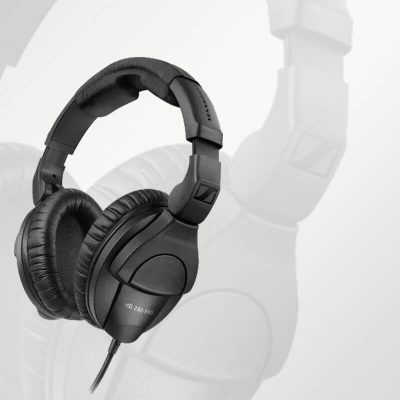
The HD 200 PRO monitoring headphones deliver powerful studio sound wherever you are. Record your own tunes, practice silently, or simply enjoy your favorite music at home – the HD 200 PRO is your ideal companion for monitoring tasks. The HD 200 PRO’s ambient noise attenuation enables you to fully concentrate on your job. Soft ear pads ensure outstanding comfort during long creative sessions (e.g. electronic piano, laptop, mixing consoles).
Bring Your Studio Sound Home.As a creator, a musician, or the one who is responsible for proper live sound, you need to focus on your job. The HD 200 PRO is much more than a headphone. It’s designed as an in-depth monitoring tool for your music. It offers a detailed, powerful sound whilst stopping any ambient noise from distracting you – be it at home, in the studio, or on stage. HD 200 PRO. Focus on your art.Outstanding, powerful sound reproduction. You won’t forget the very first time you tried the HD 200 PRO. It recreates sound in an extremely high resolution and offers every detail and every weighting you changed. If you need to validate your work, your mix, and your chords – this is your tool. You’re getting professional-level, above-budget monitoring power with exceptional dynamics. It works with your laptop, your mixing console, or your electric piano and enhances your acoustic working space. And of course, the HD 200 PRO is great to get some inspiration from your favorite music.Superior fit and comfort for long sessions. You might wear them for a long, long time, for hours and nights. The HD 200 PRO won’t become a burden, because we designed it with more than 70 years of experience. So we lowered the tension of the headband and chose materials with direct contact carefully. The result: The earpads feel feather-light and perfectly enclose every ear. You might even forget you’re wearing them.Ambient noise reduction for all monitoring tasks in the studio live and at home Speaking of comfort and earpads: As a monitoring tool, the HD 200 PRO will protect you from any noise that might distract you. The ambient noise reduction helps to create a clean space for your music. Ambient noise reduction for all monitoring tasks in the studio, live and at home |
| Weight | ||||||
| Dimensions | N/A | N/A | N/A | N/A | N/A | N/A |
| Additional information |






Reviews
There are no reviews yet.